American wineries host more than 40 million tasting visitors a year, and the tasting-room table is a working surface with a luxury job description: it must survive red-wine spills at noon and photograph like a magazine spread at golden hour. For wholesale buyers, wine events are a year-round commercial account with the same institutional reorder rhythm as our church and banquet hall guide — venues re-buy seasonally, not once a year.
The Wine Event Buyer Map
| Buyer | Event pattern | Linen need |
|---|---|---|
| Tasting rooms | Daily seated and standing tastings | Wipe-clean rectangles, highboy covers |
| Vineyard wedding and event venues | 20-40 events per season | Banquet rounds, voile overlays |
| Wine clubs and festivals | Monthly pours, annual festivals | Portable PVC sets, fitted skirts |
| Restaurants with wine programs | Pairing dinners, vertical tastings | Formal linen-look rectangles |
| Corporate wine events | Offsite tastings, client entertainment | Neutral rounds, branded accents |
Red wine is the defining constraint: it is the single most staining liquid in the food-service world, which makes coated and wipe-clean fabrics the default spec — the same engineering logic as our oil-proof tablecloth guide, because tannin behaves like oil on raw weave.
Color Strategy: Hide, Then Complement
- Burgundy, plum and deep green — the practical trio: dark enough to hide a splash, warm enough to complement wine photography.
- Cream and oatmeal — the luxury tier for seated dinners; only sellable in coated fabric, where spills wipe instead of soak.
- Charcoal and black — the modern tasting-room look, hides everything, photographs every wine color vividly.
- Never bright white in a daily pour zone — reserve white for wedding events where the venue accepts replacement economics, the same calculus in our event rental inventory guide.
Core SKU List
- Coated rectangles — 52x70 and 60x102 for tasting bars and dinner tables; the thickened faux cotton-linen cloth gives the formal linen photograph with wipe-clean behavior, and the pvc waterproof oilproof cloth is the festival and high-traffic spec.
- European classical cotton-linen look — the tassel-edge european classical cloth is the vineyard-dinner aesthetic buyers search for ("Provencal tablecloth" is the consumer phrasing).
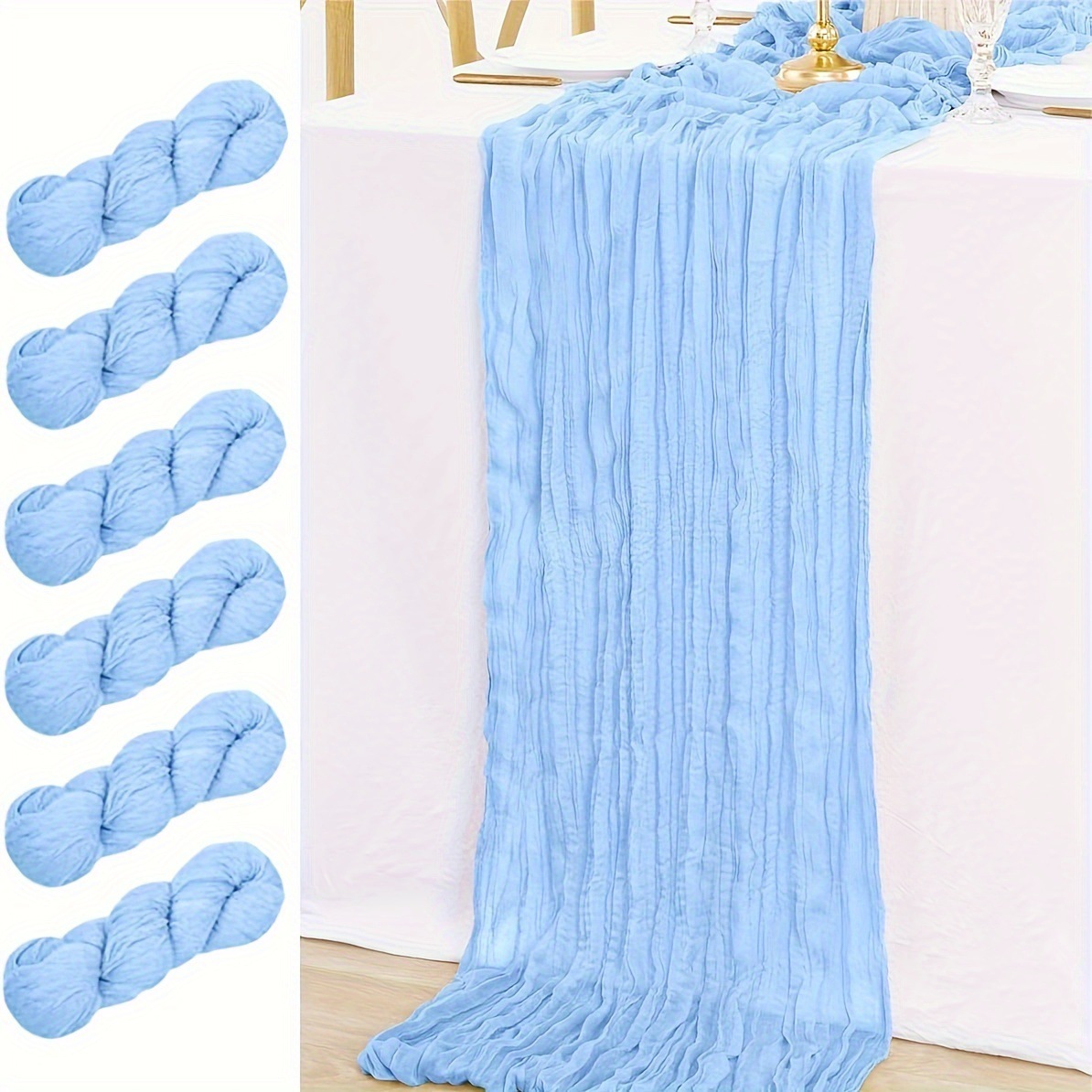
- Sheer cheesecloth runners — the boho crinkle cheesecloth runner layers over dark bases for the wedding-events tier.
- Highboy covers and fitted skirts — standing tastings run cocktail rounds; sizing in the table skirting guide.
Sizing for Tasting Rooms
Tasting bars are usually 8-ft communal tables (60x120 with a 15-in drop) or 6-ft pours (60x102); seated vineyard dinners run 60-in rounds (108-in cloths). Full drop math is in our rectangle size chart. Outdoor terrace service adds the wind rule: 230 GSM minimum or fitted corners, per our tablecloth GSM guide — hilltop vineyards are wind tunnels.
Timing: Harvest Is the Anchor
The wine calendar gives two buying peaks: March-April (venues restock before the spring tasting season opens) and August-September (harvest festival prep — the busiest, highest-spend six weeks of the year). Pitch venues in January and July; ocean DDP cutoffs are respectively early February and early-to-mid July, sharing the July boat with Oktoberfest and tailgate season — three commercial event categories in one consolidated shipment.
The Pairing Upsell
Wine venues buy adjacencies readily: cloth-and-runner sets per table type, napkin programs in the practical trio, and gift-bag stock for bottle sales — the large-capacity handwoven tote style sells at registers carrying two bottles. Bundle the pour-zone kit (cloth + runner + 20 napkins) at one price and the average venue order triples, the same kit math as our wholesale pricing guide.
Small-Lot Entry
Valvive supplies wine-event linens from a 3-piece minimum per style, mix-and-match across the practical trio and both table formats in one consolidated DDP shipment, with quotes in 1-2 days. Sample one venue with the pour-zone kit before March; harvest-season reorders arrive on the July boat.